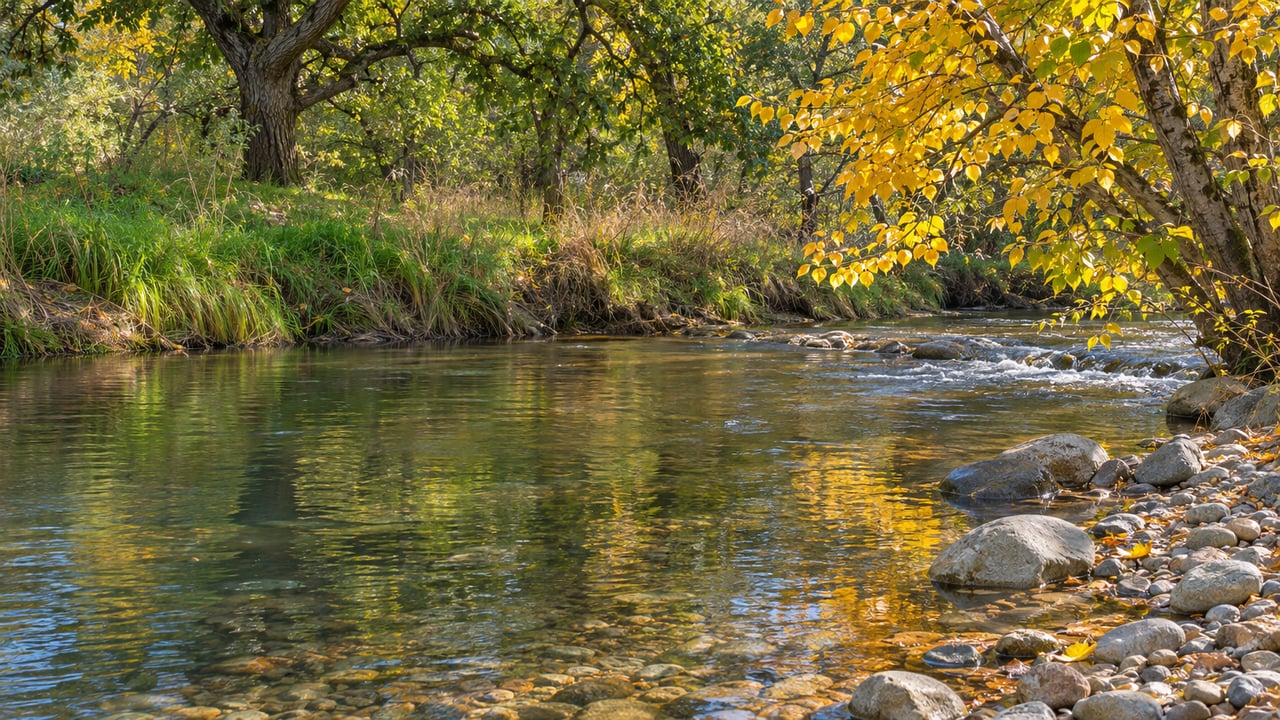
On Saturday, Nov. 22, 2025, five days before Thanksgiving, 25 volunteers with Friends of Auburn Ravine worked the creek in pairs. They started in Lincoln and went upstream past Gold Hill Road, close to Newcastle. Gold Mountain California News reported that they counted 52 live fall-run Chinook salmon and one more that had already died after spawning. The Sacramento Bee's account of the same Nov. 22, 2025 survey put the tally at 42 live salmon and four redds, the gravel nests salmon dig to spawn, in reaches above Hemphill that fish could not get to before. Whichever figure you use, every salmon that entered the ravine that fall got past the place once called Hemphill Dam.
"That's now actually a fish passage site," James Haufler, a board member of the nonprofit, told Gold Mountain California News.
For anyone in Sun City Lincoln Hills, salmon season has usually meant a drive to the American River. Auburn Ravine runs through Lincoln, though, and fish in it can now reach about four times as much creek as they could a few years ago. This year the usual destination is partly closed, so the run in our own town is the one worth knowing. Here is that run, followed upstream, starting from the downtown stretch where salmon used to stop.
Downtown Lincoln, Where the Camera Sits
For close to a century, Auburn Ravine salmon had roughly two miles of spawning habitat, between downtown Lincoln and the Hemphill site. Fall rain raises the creek, and that is when the fish come in from the Sacramento River. Friends of Auburn Ravine has run a stationary salmon camera in downtown Lincoln for about a decade to record them. The camera records well when the water is clear, and muddy flows limit what it can see.
Two groups keep an eye on this creek. Save Auburn Ravine Salmon and Steelhead, known as SARSAS, runs a weekly volunteer fish count for both species from Oct. 15 to April 15. Friends of Auburn Ravine runs a separate survey on foot. Volunteers count fish and nests, record GPS coordinates, and take DNA samples from carcasses.
Lincoln Crossing and the 2012 Step Pools
Moving upstream, the first fix was at the Lincoln Gaging Station, inside the Lincoln Crossing Nature Preserve. The Nevada Irrigation District finished that project in 2012. Crews turned about 200 feet of eroded channel into rock chutes and step pools, which opened roughly one more mile of ravine to fish. NID also notes that residents walk the preserve. That makes it one of the few spots in town where the engineering behind the run sits right beside an ordinary walking route.
Hemphill, the Ramp That Changed the Count
Hemphill was the barrier that mattered most. Before 2022, Haufler told Gold Mountain California News, only an estimated 7 to 10 percent of salmon got past the dam in wet years, and none did in dry years.
NID replaced the old diversion with a roughened-rock ramp. The ramp has a gradual slope that fish can swim up, and irrigation water still reaches the Hemphill Canal. NID's project page dates the first water through the new passage to Nov. 15, 2022, and says the work opened about six miles of upstream habitat. Adding those six miles to the original two gives the eight miles of streambed that salmon can reach today. Haufler called it "basically a four-times improvement over what they had before."
He said the first two seasons after construction both had good passage. Fall 2025 was the first season in which all the salmon that entered the ravine got past the old blockage. His group reports only fish its volunteers actually see. "We report what we've got proof of," he said, so the Nov. 22 tally is a floor, and the real total may be higher.
Where to Walk the Creek in Town
The easiest public place to walk this water is Auburn Ravine Park at 1300 Green Ravine Drive. The City of Lincoln lists it as a seasonal salmon creek. The park covers 10 acres, has multi-use trails, and can be reached from Moore Road or Green Ravine Drive. The Auburn Ravine Dog Park is part of the same park area. It has paved paths and is open daily from sunrise to sunset, so the creek walk can also be the dog's walk.
Bring the right expectation. The park is a pleasant creekside walk along a salmon creek. It is not a viewing platform, and no one can promise fish on a given day. Stay on the trail, look for clear water a few days after a storm, and you will be looking at the same stretch the cameras and surveyors watch. If you want more walking routes that start closer to home, the Sun City Lincoln Hills walking guide covers the paths inside the community.
The Rain Sets the Calendar
Last year's run came early. Haufler told Gold Mountain California News that heavy rain in early November started that season's migration, and volunteers saw no new salmon after Nov. 23. "That's odd," he said. In other years, fish keep arriving through late November, sometimes in December and even January.
So the date on the calendar matters less than the weather. A dry stretch can keep salmon waiting downstream, and a strong storm can bring them up fast. SARSAS keeps counting until mid-April, which shows how long the season can run.
The larger system has been recovering as well. In a March 13, 2026 roundup, the Water Education Foundation reported a forecast of 392,349 adult salmon in the ocean for the 2026 season. Natural-spawning returns on the upper Sacramento River topped 60,000 in 2025, up from just over 4,000 in 2024. Those are system-wide numbers, not a forecast for our creek. They do mean more fish are moving through the river that Auburn Ravine drains into.
The season has a second half. Young salmon swim downstream from February through June. On the way they meet seasonal flashboard dams, put in for irrigation west of Lincoln, that Haufler said can stand six, eight or ten feet high. SARSAS lists two downstream fixes already in place: dual-cone fish screens on the Pleasant Grove Canal, installed in 2016, and a fish screen on a property just below the Highway 65 Bypass. More work on juvenile passage is still being pursued.
Nimbus Is Running, Behind Closed Gates
The usual Thanksgiving-week outing is the Nimbus Fish Hatchery on the American River, and the fish have arrived there. Abridged photographed salmon jumping at the hatchery on Nov. 10. KCRA reported on Nov. 11 that fish were climbing the ladder and spawning, and that operations were running normally.
The visitor center and parking lot are another matter. They closed on Memorial Day for the summer and were scheduled to reopen on Labor Day, Sept. 7. According to KCRA, the hatchery said on Nov. 11 that the visitor center would stay closed until further notice, with no reopening date. The U.S. Bureau of Reclamation owns the visitor center, and it is working through the details with the California Department of Fish and Wildlife. Abridged reported that state and federal officials are negotiating a new lease for the site, and that people can still see fish from outside the closed gates.
CDFW's Nimbus page still lists normal weekday and weekend hours. Before you drive over for the holiday weekend, check the hatchery's latest announcement, since the listed hours do not reflect the closure. Until the gates reopen, a hatchery visit means watching from the fence. In Lincoln you can follow the run in the town where you live, on foot.
Saturday Mornings at McBean Park
If you would rather be in the creek than beside it, Friends of Auburn Ravine is always looking for survey volunteers. Surveys run on occasional Saturday mornings from mid-October to mid-February, depending on weather and water. The project manager starts each survey at 9 a.m. at McBean Park in Lincoln. Volunteers get kits, are assigned to sections about 1.5 miles long, and arrange carpools. Most teams finish by noon or 1 p.m.
Volunteers work in pairs or threes and never wade deeper than mid-thigh. Chest-high waders are best, and the group has some loaners. The group trains volunteers to take DNA samples from the heart of a carcass, which lasts longer than a fin. The samples go to Cramer Fish Sciences, and any hatchery tags go to CDFW. Young people ages 10 to 17 can join with a parent or legal guardian, which makes it an outing for visiting grandchildren who are tall enough to wade. Every participant or guardian signs a waiver, and the survey page has the volunteer training guide.
Life in Sun City Lincoln Hills includes the wider town of Lincoln, down to a creek with salmon in it. If you're thinking about your own next chapter here and want to know where your home stands this winter, Shawn Claycomb can walk you through it calmly and clearly. Request a complimentary home valuation, and we can talk about it over coffee before the next Saturday survey heads out from McBean Park.