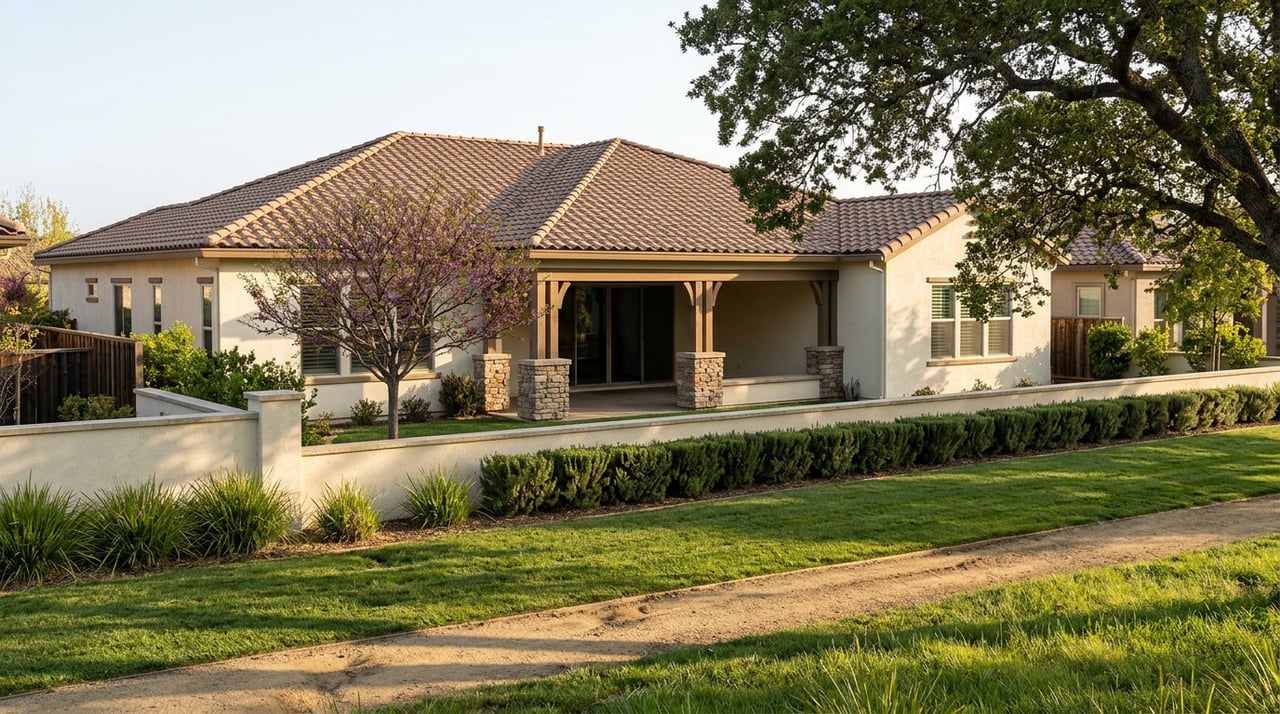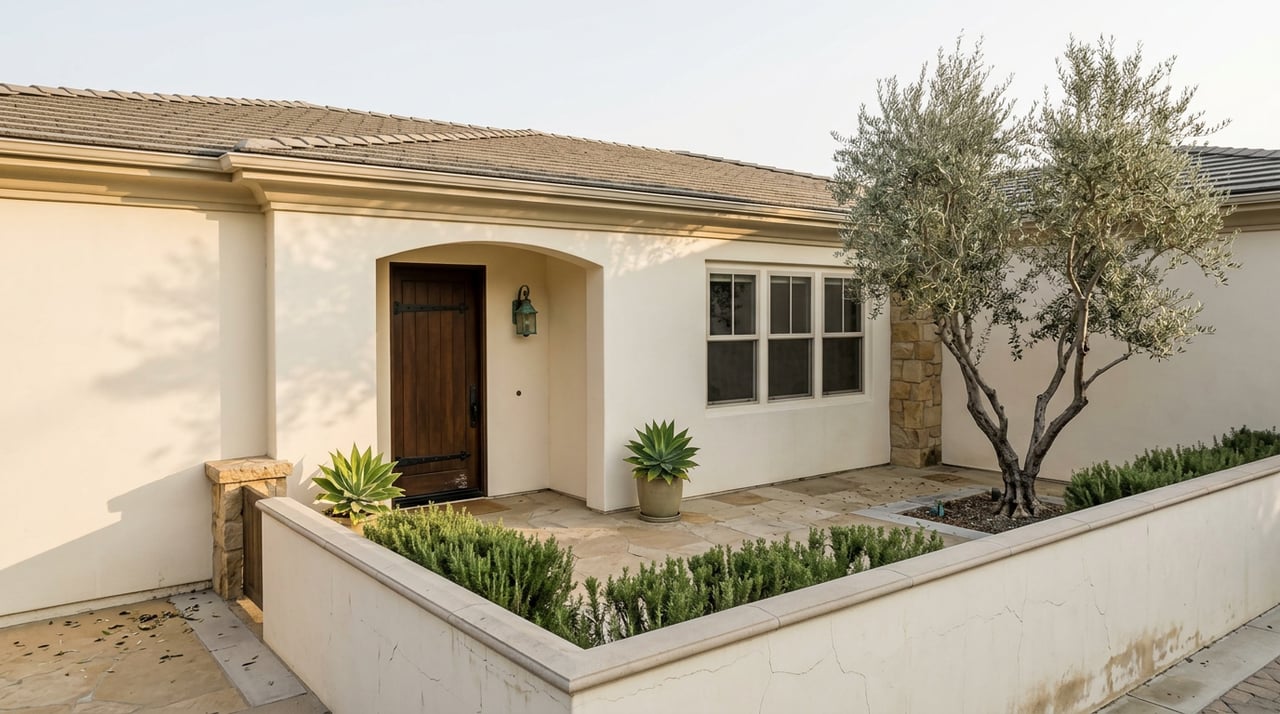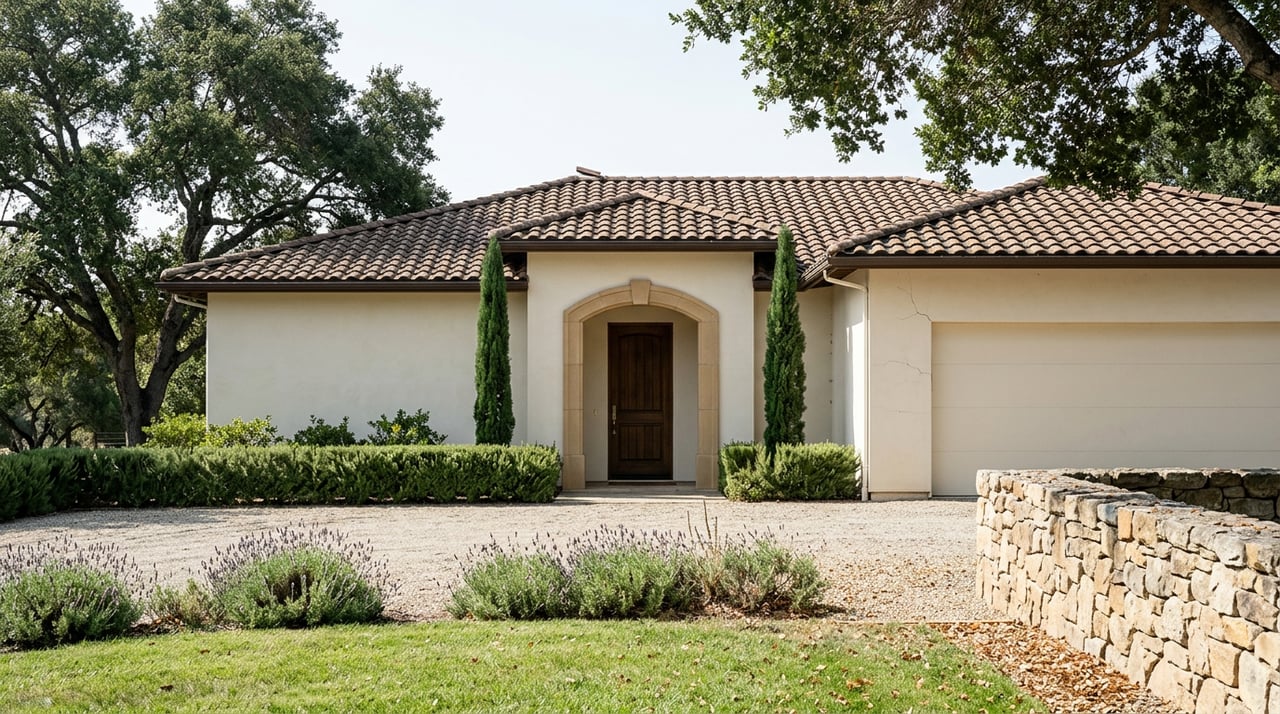
A five-acre parcel in Loomis with a horse barn, a pond, and a Mediterranean-style main house can carry a property tax bill that looks like it belongs to a quarter-acre lot in Rocklin. Buyers touring these properties usually assume it's a Prop 13 quirk, an old assessed value from decades ago that never caught up. Sometimes that's true. Just as often, the real answer is a California Land Conservation Act contract, better known as the Williamson Act, recorded against the title. It's a program most Placer County buyers have never heard of until an escrow officer mentions it, and by then the questions that actually matter are already overdue.
What That Tax Line Is Actually Telling You
The Williamson Act dates to 1965. It lets a landowner sign a voluntary contract with the county agreeing to keep land in agricultural or open-space use. In exchange, the county assesses the property based on what it earns as farmland rather than what it would sell for as a development lot. That difference can be substantial in a county where a bare acre near a growing town competes with working orchards for the same tax roll.
Placer County didn't invent looser rules to make this easy. To qualify, the county's own program page sets a floor of 20 acres and $4,500 in gross agricultural income annually, with the county's Agricultural Commissioner making the call on whether a specific operation clears that bar. That threshold matters for a practical reason: a two-acre horse property with a single paddock almost certainly isn't eligible for a new contract, so if you're touring a smaller Loomis lot, the low tax bill you're seeing is more likely an old assessed value than a Williamson Act contract. The contracts show up on the larger parcels, the ones sized more like a small farm than a big yard.
The Number Everyone Gets Wrong
Here's where most explanations of this program, even ones written for California buyers, get the timeline wrong for Placer County specifically. The standard pitch is that a Williamson Act contract runs for a rolling ten years and never actually gets shorter unless someone files a Notice of Non-Renewal. That much is accurate everywhere in the state. What changes is what happens after that notice gets filed.
In Placer County, once either the landowner or the county serves a Notice of Non-Renewal, the agreement terminates nine calendar years later, with that nine-year period beginning on the contract's renewal date of January 1. Not ten years. Nine, and the clock starts on a fixed date regardless of when in the year the notice was actually filed. During that stretch, the land stays fully bound by every restriction in the contract right up until the last day. The assessed value climbs each year of the countdown, moving from the reduced agricultural figure toward full market value by the time the period ends, though the exact yearly schedule is something the Placer County Assessor's office (530-889-4300) confirms parcel by parcel rather than something you can calculate from a general formula.
That one-year difference from the more commonly cited ten-year phase-out isn't a rounding error. If you're comparing a Loomis parcel to a similarly priced lot in Granite Bay or Rocklin, knowing exactly where a property sits on that nine-year clock, and whether the clock has even started, changes what the land is actually worth to you over your holding period.
| Contract status | What it means for a buyer |
|---|---|
| Fresh 10-year contract, no non-renewal filed | Full agricultural assessment continues indefinitely. Full restrictions remain in force with no end date. |
| Non-renewal filed, early in the 9-year countdown | Tax bill still low but rising. Restrictions still fully in force for years. |
| Non-renewal filed, near the end of the 9-year countdown | Tax bill approaching market value. Restrictions about to lift. Most attractive to a buyer who eventually wants to build. |
The One-Dwelling Rule Nobody Mentions at the Open House
The tax savings get all the attention, but the restriction that surprises buyers more often is what the contract does to your building rights. Under Placer County's Williamson Act program, land under contract is generally limited to one single-family dwelling for the owner or manager of the agricultural operation, regardless of how many parcels sit inside that preserve. Additional housing, including an accessory dwelling unit or a junior accessory dwelling unit, is only permitted if the county's Agricultural Commissioner and Planning Director determine the operation genuinely requires more on-site labor than the owner alone can provide, and even then the cap tops out at one main house, one ADU, and one JADU per parcel.
That's a meaningful ceiling if your plan for a Loomis property includes a guest house for aging parents, a rental unit, or a workshop with living quarters attached. It's also why the state's own guidance treats any structure over 2,500 square feet built after January 1, 2004 without proper authorization under the contract as a material breach, one that can trigger a penalty equal to 25 percent of the land's value and 25 percent of the value of the improvements, according to the Department of Conservation's contract removal guidance. A buyer who assumes five acres means unlimited flexibility to add structures later is working from the wrong set of assumptions entirely.
The contract also runs with the land. If you buy a parcel under an active Williamson Act agreement, you're bound by every term the previous owner agreed to, and so are your heirs if the land eventually passes down. Selling doesn't end it either. The obligations transfer to whoever buys next, which is exactly why this needs to surface during due diligence rather than after closing.
Why This Matters More When You're Comparing Neighborhoods, Not Just Homes
Buyers weighing Loomis against Granite Bay or Rocklin are usually pricing acreage, privacy, and school access against each other. What rarely enters that comparison is the difference between two Loomis parcels that look identical on paper but sit in completely different places on the Williamson Act timeline. A five-acre lot with a contract that just entered non-renewal is a very different asset than a five-acre lot nine years into non-renewal with the countdown about to expire. The first one locks in agricultural-only use and today's lower tax basis for most of a decade. The second is close to full flexibility and a market-rate tax bill, which usually means a higher effective cost of ownership starting soon, but also freedom to build or subdivide sooner.
None of this is theoretical. Placer County's Board of Supervisors handled a Williamson Act contract rescission and replacement in November 2025 for a parcel on Callison Road in the unincorporated Penryn area, which borders Loomis directly on the county's map of rural, unincorporated land west of Interstate 80. The same governing body, on the same general docket cycle, has routinely handled Loomis-area land matters, a reminder that these contracts aren't dusty 1965 paperwork sitting untouched. They get rescinded, replaced, and renegotiated in real time as ownership and agricultural plans change.
What to Ask Before You Write an Offer
- Request the preliminary title report early. A recorded Williamson Act contract shows up there before it shows up anywhere else.
- Ask directly whether a Notice of Non-Renewal has been filed, and if so, the exact date it was served, since that determines how much of the nine-year Placer County countdown remains.
- Call the Placer County Assessor's office to confirm the parcel's current agricultural assessment versus what it would be at full market value, so the gap is priced into your offer rather than discovered in your first full tax bill.
- Confirm with the county's Agricultural Commissioner whether the existing use on the property, including any horse-keeping, meets the qualifying commercial agricultural threshold, since compatible use standards can be interpreted narrowly.
- If you're planning to add a guest house, workshop, or second dwelling, get written confirmation from Placer County Planning on what's actually permitted under the existing contract before you fall in love with the floor plan.
The Bottom Line
A low tax bill on a big Loomis lot isn't a discovery. It's a disclosure waiting to happen. The buyers who come out ahead treat the Williamson Act contract the same way they'd treat square footage or lot lines: a fact to price in, not a surprise to absorb at closing.
If you're comparing a Loomis property against other Placer County options, or you already own acreage here and aren't sure what's recorded against your own parcel, Shawn Claycomb can help you sort out what a specific listing's contract status actually means for your numbers. His background running financial plans before real estate means the tax mechanics get explained in plain terms, not legal ones. If you're the one holding a Loomis parcel and wondering what all of this does to its current value, request a complimentary home valuation and get a straight answer before you list.
A Few Quick Questions
Does every large lot in Loomis fall under a Williamson Act contract? No. Only parcels where an owner voluntarily applied and met Placer County's threshold of 20 acres and $4,500 in annual agricultural income are eligible in the first place. A two- or three-acre horse property almost certainly isn't under one of these contracts.
I just want horses, not a commercial farm. Does that count? Compatible use standards vary by county, so this is a question for Placer's Agricultural Commissioner directly. Some counties treat recreational horse-keeping differently from commercial livestock production for qualifying purposes, and getting a written answer before you write an offer saves a surprise later.
Can I add a guest house if the property already has a Williamson Act contract? Only if the Agricultural Commissioner and Planning Director determine the operation needs additional on-site labor beyond the owner, and even then the cap is one main house, one ADU, and one JADU per parcel. Get this confirmed in writing before you plan around it.