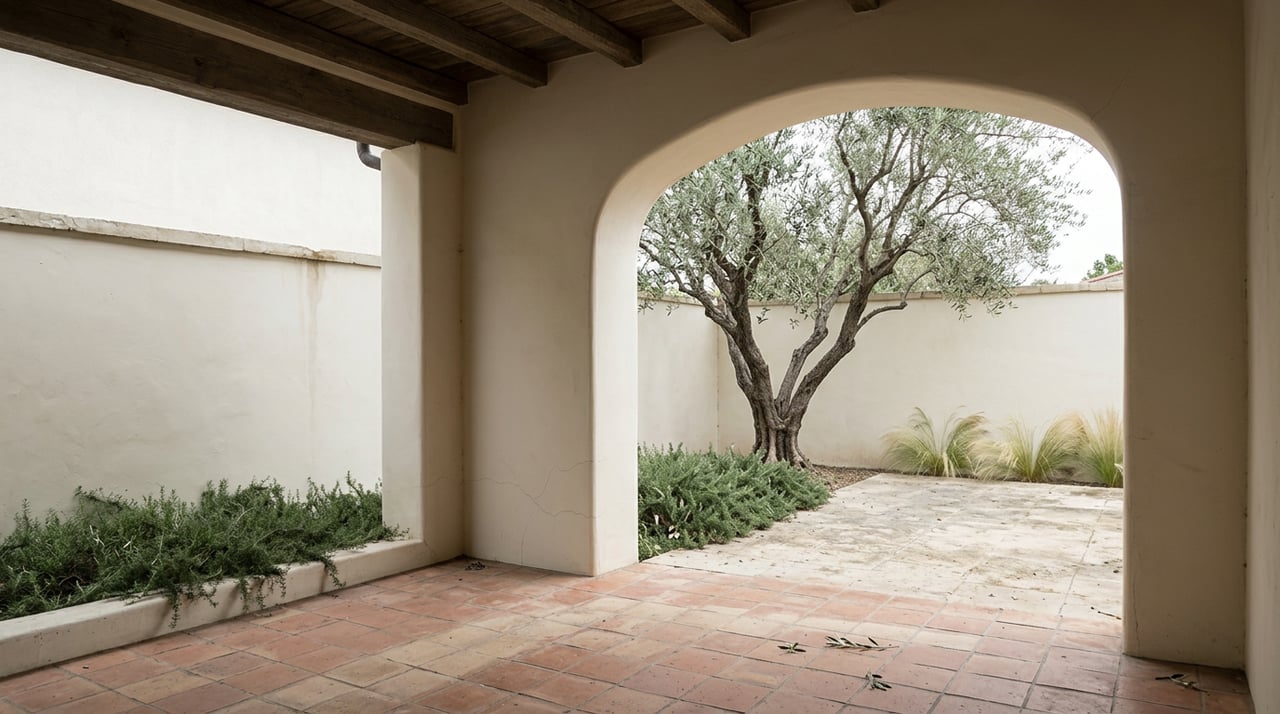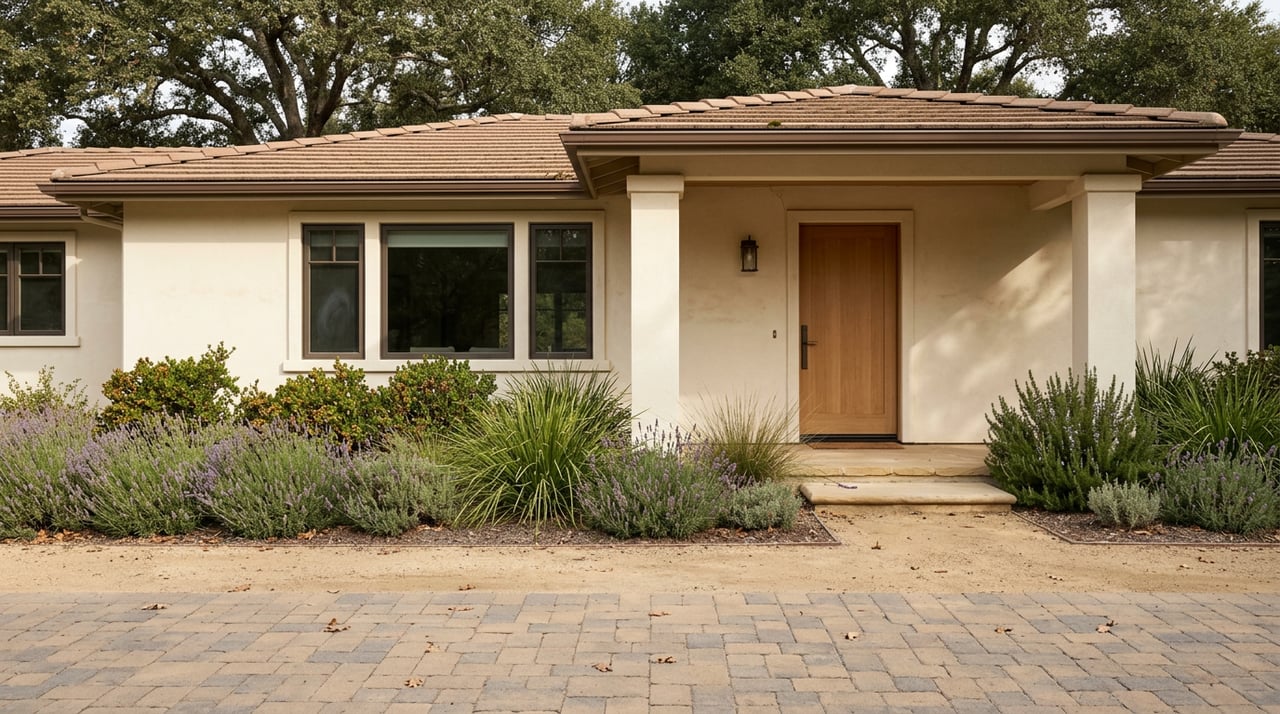
A Loomis listing usually looks like a bargain per acre next to a comparable Granite Bay or Rocklin parcel. The land is bigger, the setbacks are longer, the trees are older, and the price per square foot on the improvements tends to read soft. Then the preliminary title report arrives and the file gets more complicated.
Three specific frictions reprice a Loomis acreage deal after the offer is accepted. Each one is invisible on the MLS sheet and none of them show up on a portal's median. A buyer who underwrites them before writing wins the property on better terms. A buyer who discovers them in escrow either renegotiates or walks, and either outcome burns weeks.
The Williamson Act Line On The Preliminary Title Report
Placer County has a working agricultural base, and a meaningful share of Loomis-area acreage sits under a Williamson Act contract. The program is a California statute from 1965 that lets a landowner accept restrictions on the use of a parcel in exchange for a property tax assessment based on the land's agricultural value rather than its market value. It enables local governments to enter into contracts with private landowners for the purpose of restricting specific parcels of land to agricultural or related open space use, and in return landowners receive property tax assessments which are much lower than normal because they are based upon farming and open space uses as opposed to full market value.
For a seller, the contract is a running tax benefit. For a buyer, it is a set of rules that transfers with the deed. Two provisions matter in the underwriting.
First, the exit is slow. Non-renewal starts a 9-year phase out, after which the contract restrictions are lifted. A buyer who wants to build a shop, a barn conversion, an ADU, or a second residence has to either fit the plan inside the contract's allowed uses or start the clock and wait most of a decade for the restrictions to lift. During that window, the property tax basis rises gradually toward full market value, so the carrying cost of the parcel moves against the owner year by year.
Second, the penalty for building something the contract does not allow is not a fine to be negotiated later. A material breach of the contract could result in a substantial monetary penalty to the property owner in an amount equal to 25 percent of the unrestricted value of the land and buildings related to the breach, and state law defines a material breach as any commercial, industrial, or residential building constructed after January 1, 2004 that is specifically not allowed by state law, the contract, or local rules and is not related to an agricultural or compatible use. On a Loomis parcel worth $1.4M unrestricted, that is not a rounding error.
The "so what" for a buyer: the tax savings the seller is quietly enjoying are the same tax savings you will inherit only if your plans for the land already fit inside an agricultural use. If they do not, the true cost of the parcel is the sticker price plus the non-renewal tail plus the option value of the improvements you cannot build during it. That is a very different number than the one on the listing sheet.
What Placer County Environmental Health Actually Inspects At Transfer
Most Loomis parcels outside the town core are on a private well and a private septic system. In Loomis, septic systems are the norm rather than the exception, with many homes situated on larger parcels and outside municipal sewer infrastructure (read about septic system costs at closing in Placer County).
A short list of the items an experienced buyer's agent will have documented before removing contingencies:
- Well log, static water level, and yield. Recorded well log showing depth, static water level, and yield, well permits and any shared well agreements if multiple parcels use the same source, recent water quality testing for bacteria, nitrate, arsenic, manganese, and other locally relevant contaminants, and a professional opinion from a well driller on yield, seasonal reliability, and pump condition.
- Septic permits and records. Tank size, drain field location, age, and maintenance history, required setbacks from wells, streams, property lines, and structures, and space for a future replacement area in case repairs are needed.
- Riser access. Many older Loomis septic systems were installed without risers, leaving tank lids buried underground, which requires excavation at every service visit, and for many Loomis homeowners risers are a one-time upgrade that reduces long-term maintenance expenses and ensures compliance with Placer County standards.
- The 100% repair area. Placer County treats the reserved replacement footprint as a real constraint on any future pool, pond, second driveway, or outbuilding. If you are planning to add a swimming pool to your property or planning to further develop your property by adding a pond, installing a second driveway or building an out building, you should be aware of the location of your on-site sewage disposal system and 100% repair area, and there are setbacks from structures to the leach field, septic tank, and repair area.
Two of these items routinely produce credit negotiations in escrow. Riser retrofits are usually inexpensive but they signal a system that has not been maintained on a pumping schedule. And Placer County has a real answer on inspection during transfer: septic inspections during home sales are often required, and Placer County regulations and buyer requirements may mandate inspection documentation during escrow.
The "so what" for a buyer: a Loomis inspection is not one report. It is a well report, a septic report, a water quality panel, and a site walk with a septic contractor who can locate the repair area and confirm your future plans do not sit on top of it. Any one of those documents can move the price by five figures.
The Comp Problem The Appraiser Cannot Solve
The third friction is quieter and rarely discussed in the first showing. It shows up when the appraisal comes back and the loan officer starts asking for adjustments.
Loomis parcels are heterogeneous by design. A 2.3-acre ranchette off Barton Road, a 5-acre horse property on King, and a 10-acre parcel with a seasonal creek near Val Verde are not comparable properties in any meaningful sense, and there are not enough of each type closing each quarter to build a clean comp set (explore current Loomis homes for sale). Comparable sales can be sparse, so engage a lender with rural experience. The consequence for a buyer is that the appraisal is more likely to come in with adjustments the lender scrutinizes closely, and financing conditions get tighter as the loan-to-value climbs (read about how home insurance changes impact rural Placer County buyers).
Lenders add their own overlay on top. Lenders look closely at legal access, well and septic, and insurability. "Legal access" is the phrase that surprises buyers on a shared-driveway parcel. If the driveway crosses a neighbor's land under an unrecorded agreement, or if the road-maintenance agreement is silent on cost-sharing, the underwriter will either require a title endorsement or condition the loan.
The "so what" for a buyer: rate-shopping a Loomis acreage loan with a lender who does mostly tract product in Roseville is a way to get a rate quote you cannot close. The lender who quotes 20 basis points higher but understands well, septic, and access is the one who gets the file to funding.
A Working Underwriting Sequence Before You Write
The three frictions stack. Underwriting them in the right order keeps the deal moving and keeps inspection dollars from getting spent on a property that will not appraise.
- Pull the preliminary title report and search the exceptions for a Williamson Act contract or an agricultural preserve designation before you spend money on inspections.
- Confirm zoning, allowed uses, and minimum lot size with the Town of Loomis and Placer County. Building envelopes and permit triggers are set at that level, not by the seller.
- Request the well log and any shared-well agreement. If either is missing, price the risk before removing the inspection contingency.
- Order the septic inspection with a contractor who will locate the tank, pump it, video the lines, and mark the 100% repair area on a site sketch.
- Send the file to a lender who has closed rural Placer County loans in the past twelve months, not the retail branch your realtor introduced you to last week.
- Compare the property tax bill under the current Williamson assessment to the unrestricted assessment your future ownership might trigger. That is the real carrying cost.
Questions From The Table
Can I keep the Williamson Act tax treatment if I buy the property?
Yes, contracts run with the land. You inherit both the tax benefit and the use restrictions. If your intended use fits inside the allowed agricultural or compatible uses, nothing changes. If it does not, the file becomes a planning conversation before it is a construction conversation.
Is a septic inspection required by law in a Loomis sale?
Not universally, but functionally yes. Placer County Environmental Health regulates on-site systems, most lenders and most buyers now require documentation, and negotiations without it tend to fall apart late in escrow. Treat it as a standard cost.
How long does a Williamson Act non-renewal actually take?
Nine years from the January 1 that follows the filing. A notice filed by October 1 begins the phase-out on January 1 of the following year. During the tail, restrictions remain in force and the assessment adjusts each year.
Does the appraisal issue mean I need a larger down payment?
Sometimes. On a heterogeneous parcel with thin comps, an appraisal that comes in under contract price puts the difference on the buyer. Building appraisal-gap language into the offer, or leading with a lender who has done recent rural Placer County files, tends to solve for it.
Every acreage transaction in Loomis has its own version of these three frictions (explore lifestyle around Loomis from Taylor Road to the Train Depot). The parcels are individual, the contracts are individual, and the septic systems are individual. Pricing a listing honestly means reading the title report before the tour, not after. If you are weighing a Loomis property against a suburban comparable in Rocklin or Granite Bay and want the total-cost picture underwritten cleanly before you write, local real estate specialist Shawn Claycomb works these files with a CFP background and a resident's read of the market. Request a complimentary Loomis home valuation or schedule a buyer consultation through the site.